If you're reading this, you're probably one of the people who has to make medical device purchasing decisions without the luxury of guessing wrong. I've been on the procurement side of healthcare for eight years, managing a device budget of roughly $12 million a year that covers everything from $4,000-per-case orthopedic implant systems to $35 pulse oximeters. I've negotiated with more than 40 vendors in that time, and the hardest lesson I've learned is simple: there's no single supplier that's the right answer for every line item.
Some of you need to evaluate the Zimmer Biomet product catalog to support a new total joint program. Some of you need to outfit a telehealth unit with blood pressure monitors and a remote patient monitoring platform. A few of you need both—and the instinct to bundle it all through one distributor can be a multi-year mistake in disguise. I made that mistake once. I don't plan on making it again.
Here's the three-scenario framework I use, with a quick self-diagnosis at the end so you can tell which one applies to you.
There's No Universal Procurement Playbook
I used to look for one "medical supply partner" that could handle everything. We consolidated vendors after a bundled pitch from a large distributor, then spent the next two years finding exactly where they were mediocre. The orthopedic implant reps didn't understand the monitoring side. The monitoring team couldn't help with surgical logistics. Our invoices told the real story: this distributor was accountable for their quarterly quota, not our program outcomes.
Now I break buying decisions into three scenarios:
- Scenario 1 — You're building or expanding an orthopedic surgical program. A focused implant manufacturer like Zimmer Biomet deserves the bulk of your attention.
- Scenario 2 — You need patient monitoring devices and remote care tools. A monitoring specialist is the right call.
- Scenario 3 — You're a health system that genuinely needs both. Don't bundle. Run two specialist relationships and coordinate them carefully.
If that last one sounds counterintuitive, good. It's the most expensive mistake I've made in my career.
Scenario 1: You're Building an Orthopedic Surgical Program
If your surgeons do regular joint replacement volume—hips, knees, shoulders—your buying decision comes down to surgical outcomes, implant reliability, and rep coverage. Not shaving a few dollars off each item.
Reading the Zimmer Biomet Product Catalog Like a Systems Map
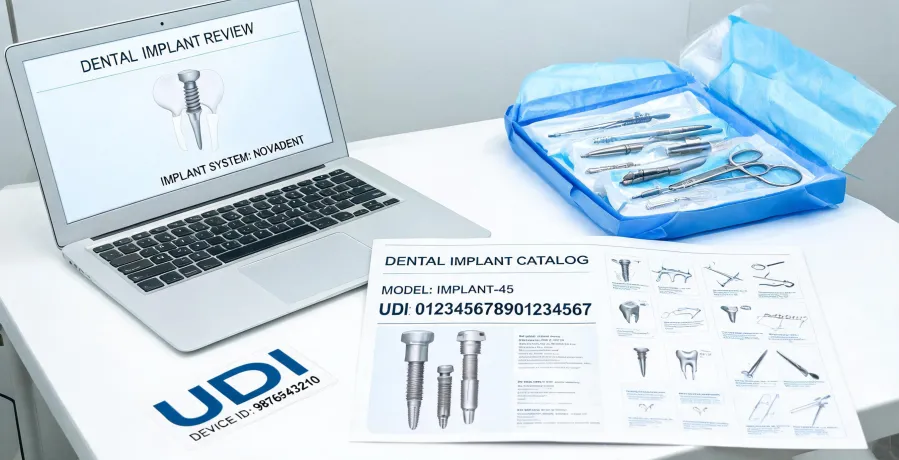
I've reviewed the printed and digital Zimmer Biomet product catalog more times than I can count. The knee portfolio (Persona, Oxford partial knee), hips, shoulders, dental implants, plus the instruments and biologics that support them—it's a broad set of options. But a catalog only helps if it shows you how systems fit together, especially in a multi-surgeon department.
Here's a practical cost-controller tip: ask about instrument tray compatibility. Total cost of ownership isn't just the implant price. It's what your central sterile team spends sterilizing, assembling, repairing, and storing trays. A product line that shares instruments across procedures will quietly save you five figures a year. That line never appears on the quote. You have to dig for it.
Why the ROSA Installed Base 2025 Figure Matters
During our robotic surgery evaluation, the finance team kept asking why my vendor summary included a data point labeled "Zimmer Biomet ROSA installed base 2025." They saw it as marketing. I saw it as service capacity. In early 2025, Zimmer Biomet's published investor materials pointed to continued year-over-year growth in the ROSA installed base across knee and dental applications. For a buyer, that scale has concrete meaning:
- More service engineers in the field, which matters when a surgical robot can't just wait until Monday.
- More surgeons through the learning curve, which shortens your team's ramp-up.
- More software update cycles, which reduces the risk of betting on a platform that stalls.
Don't hold me to the exact installed-base figure—check the latest investor materials—but the direction matters. A growing robot platform carries its support ecosystem forward. A niche system with a charismatic sales team carries something closer to a gamble.
The Real Cost of the Lowest Implant Quote
In Q2 2024, we renegotiated our implant tier pricing. A different manufacturer came in 14% lower on our most-used primary hip stem. The numbers pointed one way; my gut pointed the other. It took a month of modeling to resolve the conflict: rep availability for trauma call, loaner instruments for Saturday cases, resident education support, published revision data. When it was all in the spreadsheet, the 14% gap shrank to about 2%. We stayed with the incumbent.
To be fair, the other vendor wasn't bad. They just weren't accountable for the total system cost. Nobody is—unless you calculate it yourself.
Dental Programs: Same Logic, Same TCO Lens
If you're buying for a dental implant practice, the same logic applies. Look for a dental implant catalog with documented long-term clinical data, abutment compatibility, and a digital workflow that doesn't lock you into one lab. A dental implant program lives or dies by clinical evidence and prosthetic flexibility, not by the lowest unit price.
Scenario 2: You Need Monitoring Equipment, Not Implants
Now flip the scenario. Say you're a multispecialty clinic, home health agency, or telehealth operation that needs blood pressure monitors, pulse oximeters, and remote patient monitoring software for chronic disease management. That's not Zimmer Biomet's lane—not what their product catalog is built for, and not something I'd ask them to provide. A specialist monitoring vendor is the obvious choice.
How Does a Pulse Oximeter Work?
I get asked this constantly, so here's the short version. A pulse oximeter shines red and infrared light through the fingertip. A photodetector on the other side measures how much of each wavelength gets absorbed. Oxygenated hemoglobin absorbs infrared light more strongly; deoxygenated hemoglobin absorbs red light more strongly. The ratio between the two signals becomes the SpO2 percentage on the screen.
Simple in theory. In practice, sensor quality, algorithm validation, and optical behavior across different skin pigmentations all matter. In 2024, the FDA raised concerns about pulse oximeter accuracy in certain populations, which is precisely why the cheapest option on Amazon is not a defensible procurement decision for a clinical program. When a vendor claims their monitor is "FDA-cleared," I check the FDA 510(k) database myself. The clearance number shows what the device is cleared for—not what the sales deck claims.
Evaluating a Remote Patient Monitoring Vendor
Remote patient monitoring is not a device in a box. It's a workflow, and that's where hidden costs live. Here's what I evaluate:
- EMR integration — do readings flow into the chart automatically, or does someone retype them?
- Billing readiness — can the vendor generate documentation that works for CMS remote patient monitoring reimbursement codes?
- Patient usability — is that blood pressure monitor genuinely easy for a 78-year-old with limited dexterity?
- Real human support — who answers the phone at 9pm when a patient's device fails?
That last item is why a $60 monitor can become a $600-per-patient program. A vendor whose entire business depends on monitoring uptime treats the problem differently than a general distributor selling monitoring as a side category.
Scenario 3: You Genuinely Need Both
If you're in a larger health system and both categories show up on your annual spend plan, you're in Scenario 3. This is the danger zone.
In 2023, we issued an RFP to a distributor that offered to bundle orthopedic implants with med-surg monitoring equipment. On paper, the consolidated quote came in 8% lower than managing separate contracts. The spreadsheet said yes. My gut said no, and I went back and forth for weeks.
Eighteen months later, the outcome was unambiguous: integration delays ate the discount. The distributor's monitoring division didn't understand our cardiac rehab workflow. Their implant team was a reseller, not a clinical partner. And we never got a straight answer on who owned surgical scheduling integration. The "one throat to choke" premise turned into a throat pointing at itself.
Here's the unpopular opinion I've landed on, and it's served me well since: the vendor who tells you what they're not good at is the vendor you can trust for what they are good at. When we need orthopedic implants and robotics, we hold Zimmer Biomet to clinical evidence, service performance, and product catalog transparency. When we need monitoring, we work with specialists who live and breathe that technology. We don't ask either to step outside their lane.
The coordination piece is our job. Separate contracts, one shared integration project manager, and a quarterly review with both vendors in the room. That's two hours every ninety days—far cheaper than the change orders and finger-pointing that came with bundling.
How to Figure Out Which Scenario You're In
I'm not going to end with "it depends," because you need something you can act on. Run through these four questions:
- Does your orthopedic service line drive real surgical volume? If you're doing total joints on a regular schedule, you need an implant partner with portfolio depth, robotics experience, and clinical evidence. That puts you in Scenario 1 territory.
- Are you managing chronic disease patients outside the hospital? If hypertension, COPD, heart failure, or diabetes monitoring is part of your strategy, a monitoring specialist should own that category. That's Scenario 2.
- Where does your budget actually sit? When I audited our 2023 spending, the split between surgical and non-surgical devices predicted the right vendor strategy every time. If 80% of your line items are implants and robotics, act like Scenario 1. If monitors and home-health equipment span twenty locations, act like Scenario 2.
- How much coordination bandwidth do you have? Scenario 3 works if your contracting team can host two vendor relationships. If you're stretched thin, pick the category most essential to your mission, build a strong relationship there, and accept the tradeoff in the other.
Bottom Line: Clarity Beats Consolidation
I understand the appeal of a consolidated contract. Fewer invoices, fewer meetings, and the illusion of control over a sprawling supply chain—I used to chase that myself. The data didn't support it.
After six years of reviewing purchasing patterns, the lesson repeats: specialization wins on total cost of ownership, and it's especially true when clinical outcomes are in the balance. A focused manufacturer like Zimmer Biomet can serve your surgical program with a depth of product catalog, robotic-assisted surgery experience, and educational support that a generalist distributor can't easily replicate. And a focused monitoring vendor will generally outperform a generalist on pulse oximetry, blood pressure monitoring, and remote patient monitoring.
Know which one you're signing. Don't buy the surgical robot and the blood pressure cuffs from the same SKU list just because someone promised a discount.

Leave a Reply