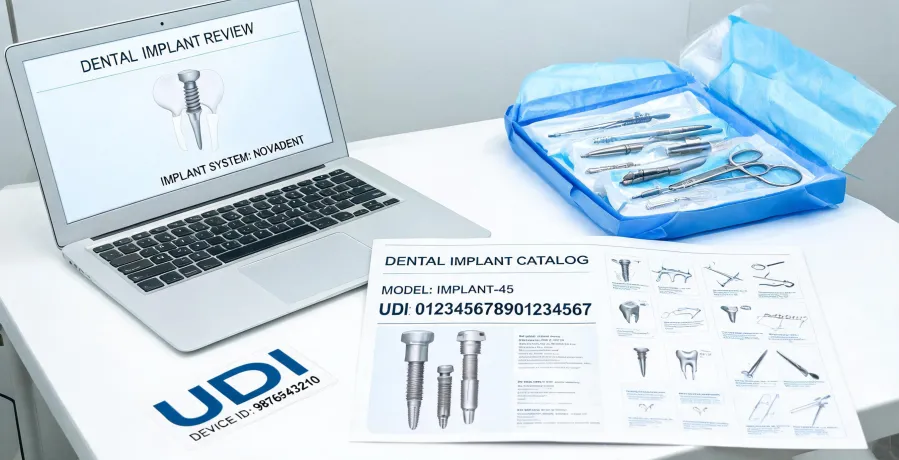
Here's my opinion, straight: if you're buying medical devices on a tight deadline and you pick the lowest quote, you're not saving money. You're deferring risk. I say that as a quality compliance manager at a medical device company. I review roughly 150 items a year before they reach our customers—instructions for use, product documentation, incoming instrument batches. In 2024, I rejected 12% of first deliveries. Not because vendors are dishonest. Because "good enough" on paper and "good enough" in real life are different things.
Here's what I mean by verification. When I look at a product page from the Zimmer Biomet official website, I want three things: the product code, the intended use statement, and the version date of the instructions for use. If a supplier can't give me those in under a minute, I've learned to slow down.
The official website is a due diligence tool, not a brochure
From the outside, the Zimmer Biomet official website looks like a marketing catalog. The reality is it's one of the few places where you can verify what the manufacturer actually approved. If I search for a knee implant system, I want the surgical technique PDF and the current instructions for use, not a distributor's summary. People assume "official website" means the same as "manufacturer-approved." For regulated medical devices, those two things overlap, but not always. I use the official site as my anchor.
It's tempting to think you can just compare unit prices. But identical specs from different vendors can result in wildly different outcomes when you inspect incoming goods. I learned this the hard way. I assumed "same specifications" meant identical results across vendors. Didn't verify. Turned out each had a slightly different interpretation of "acceptable." That's not a bad-vendor story; it's a communication story. We were using the same words, but meaning different things.
Let's make this concrete. A mobility aid—a cane, walker, or crutch—looks simple. But for a patient leaving the hospital after a knee replacement, the difference between a stable and unstable walker is a fall risk. I've watched our rehab team check the width, the handle height, and the rubber feet before approving discharge. That's not overkill; it's the same protocol we use for surgical instruments.
Rush delivery is a price for certainty, not just speed
I have mixed feelings about rush fees. On one hand, they feel like gouging. On the other, I've seen the operational chaos a true rush order causes around here: people pulled off other tasks, freight booked separately, inspection slots opened. Maybe the premium is justified.
Here's the point: when you're up against a deadline, the thing you're buying is certainty, not just speed. In March 2024, we paid $400 extra for rush delivery of a surgical instrument set. The alternative was cancelling a $15,000 training event. If I remember correctly, the set arrived in two days—or rather, two and a half, counting the inspection hold. That $400 bought us the ability to plan the event and tell the surgeons it was definitely happening. It wasn't a transportation cost. It was insurance.
People assume the lowest quote means the vendor is more efficient. What they don't see is which costs have been hidden or deferred. After getting burned twice by "probably on time" promises, we now budget for guaranteed delivery when a clinical schedule depends on it.
I once said "as soon as possible" to a supplier and heard it as "whenever convenient." The part arrived two weeks later. My mistake, not theirs. Now I write "delivery by [date], confirmed in writing" into every rush order. It sounds overly formal. It saves me from having to explain a bad decision to a surgeon.
What quality inspection taught me about urgent purchases
Let me give you a concrete example. In Q1 2024, we received a batch of 250 ultrasonic aspirator tips. Visually, they looked fine. But the mating connector was 0.8mm off from the handpiece spec. Normal tolerance is ±0.5mm. The vendor said it was "within industry standard." We rejected the batch. That decision cost us a $22,000 redo and delayed a surgeon training by three weeks. I know the number because I wrote the report.
Was the vendor negligent? Probably not. They believed "standard size" was enough. We believed "standard size" meant our existing instruments would fit. We were both wrong. The lesson wasn't "avoid this vendor." The lesson was: define the spec in writing, and verify the first article before you pay for expedited shipping.
If someone searches "what is catheter ablation," they may want the textbook definition: using heat or cold to interrupt abnormal heart rhythms. Fine. But on the procurement side, the definition is not the deliverable. You need to know whether the catheter's curve, length, and stiffness match the mapping system in your lab. I apply that same mindset when I look at an ultrasonic surgical aspirator for neuro cases or a dental implant system for an oral surgery suite.
Per FTC advertising guidelines (ftc.gov), health-related claims must be truthful and substantiated. I use that as a filter. If a reseller says a device is "compatible" or "equivalent," I want evidence. If the manufacturer's official documentation doesn't support it, the claim doesn't exist in my process.
The obvious objection, answered
To be fair, not every urgent purchase needs premium shipping or the manufacturer's official website. If you're ordering a stethoscope from a trusted distributor and it's two days late, that's annoying, not dangerous. In a field where a failed implant can shut down an OR, the cost of uncertainty is much higher. The key is knowing when you're betting a patient case on "probably."
That said, I'm not saying every supplier must be a giant brand. I've worked with small specialty shops that delivered better than large ones. The point is not "only buy from Zimmer Biomet." The point is: verify the source, confirm the spec, and if you need it by Wednesday, pay for the guarantee that makes Wednesday a promise instead of a hope.
So here's my bottom line. "Probably" is not a delivery date. "Within industry standard" is not a specification. "Official website" is not a marketing term—it's a quality-control starting point.
I'd rather pay $400 for certainty than save $400 and lose a week. Trust me on this one.

Leave a Reply