-
Who this is for
-
The 7-step checklist
-
Step 1: Verify the manufacturer's actual footprint
-
Step 2: Translate the spec sheet into failure modes
-
Step 3: Confirm what the device actually shows
-
Step 4: Map the consumables ecosystem
-
Step 5: Run a blinded usability check
-
Step 6: Get service commitments in writing
-
Step 7: Lock acceptance criteria before the PO leaves your desk
-
Step 1: Verify the manufacturer's actual footprint
-
Four mistakes I still see teams make
Who this is for
I'm a quality and brand compliance manager for a four-hospital system in the Northeast. I review every piece of medical equipment before it reaches a patient care area—roughly 200 units a year, across infusion pumps, monitoring gear, hospital beds, and imaging equipment. In 2024, I rejected about 18% of first deliveries. Not because the devices were broken. Because the documentation, specs, or consumables didn't match what we'd contracted.
This checklist is for anyone who signs off on inbound medical equipment. It's 7 steps. It takes me about 40 minutes per delivery once you know the flow. And it's saved us from at least three significant renegotiations since 2022.
What it won't do: tell you whether to buy a new hospital bed or whether your dental clinic needs a cone-beam CT. That's capital planning. This is about acceptance.
The 7-step checklist
Step 1: Verify the manufacturer's actual footprint
When I first started this job, I assumed a name-brand device from a name-brand manufacturer would come with name-brand documentation. It didn't. My first big rejection in Q1 2022 was a batch of infusion sets where the sterilization certificates referenced a facility we couldn't verify.
So now every supplier gets a 10-minute check before their first delivery reaches our dock:
- Is the manufacturing site listed on the 510(k) or the device label? For example, Smiths Medical's Keene, NH facility is a long-standing site for airway and IV products—if a label says Keene NH, that should match the FDA establishment registration.
- Is the brand a current trademark or a legacy label? Jelco, for instance, is a Smiths Medical brand with roots going back decades. When you see a Jelco catheter, make sure the label matches the current brand owner—not a repackaged legacy product from a gray-market distributor.
- Pull the FDA MAUDE database for the model. If there are more than a few reports of the same failure mode in the last 24 months, ask for the supplier's CAPA summary.
This takes 10 minutes and has caught two mislabeled shipments for us.
Step 2: Translate the spec sheet into failure modes
Spec sheets are written for procurement. Failure modes are written for reality. The two don't always line up.
Take hospital beds. A spec might say "500 lb weight capacity." Fine. But what's the dynamic load rating during CPR positioning? What's the duty cycle on the motor if a 350-lb patient is repositioned 12 times a day? What happens to the frame when housekeeping moves the bed with a patient on it—again—because the brakes failed?
My rule: for every spec line, I write down the most likely way it fails in our environment, then ask the vendor to confirm or clarify in writing. If they can't, we add it to the acceptance criteria.
This is the step most teams skip. It's also where we've saved the most money—by catching a "standard" that wasn't our standard before we signed.
Step 3: Confirm what the device actually shows
For imaging equipment, this step matters more than any spec table.
"What does ultrasound show?" is not a marketing question. It's a clinical question, and it has to be answered against your actual patient population. A general abdominal probe doesn't show the same thing as a phased-array cardiac probe, and neither one shows what a high-frequency linear probe shows at 3 cm depth. If your order says "ultrasound system" and your clinical team expects soft-tissue detail at 15 cm, you're going to have a bad week.
Ask for a demo with your own phantom—or better, your own patients. Confirm what the device shows before you sign, not after.
I learned this one the hard way in 2023. We bought a point-of-care ultrasound unit based on a spec sheet. It arrived, passed incoming inspection, and then the ED director realized it couldn't do the depth she needed for a specific procedure. We hadn't asked what it actually showed. We just checked that it turned on.
Step 4: Map the consumables ecosystem
This is the step that catches the most expensive problems. Devices are commodities. Consumables are where the money hides.
Two examples from our own rejections:
- Jelco-style IV catheters. If your facility standardizes on Jelco, you need to know which safety-engineered versions are compatible with your existing sharps containers before you commit to a volume contract. We nearly ordered 40,000 units of a variant that didn't fit our existing needle disposal bins. That would've been a $12,000 mistake plus a retraining burden—so glad I double-checked the bin spec the week before the PO went out.
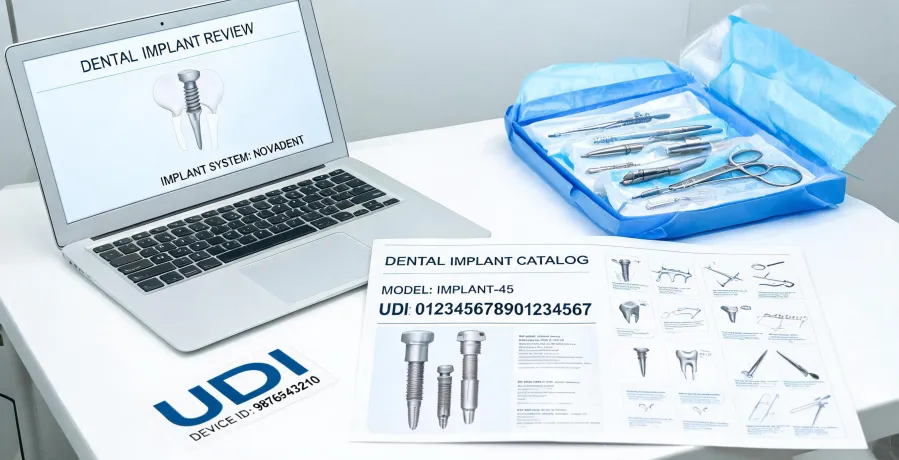
- Dental implants. If your oral surgery group uses a specific implant platform, the abutment and prosthetic components are not interchangeable across brands. A "compatible" third-party abutment may fit mechanically but fail the torque spec. I've seen a clinic lose three implants in one quarter to this exact issue.
Before you approve any device, get the accessory compatibility matrix in writing. If the vendor says "it's compatible with industry standard," ask them to define "industry standard" in the contract. They usually can't.
Step 5: Run a blinded usability check
I used to think brand loyalty among nurses was just habit. Then I ran a blinded test.
We put two IV catheter brands on the same cart—one premium, one standard—without labels. Twenty nurses used both over a week. About 68% couldn't tell the difference on the first attempt. By the fourth or fifth attempt, the premium brand pulled ahead on flashback visibility and first-stick success. The gap was way bigger on attempt four than attempt one—it only showed up under repeated use, not a single demo.
Since then, every device evaluation gets at least one blinded week with actual frontline users. Not a focus group. Not a vendor demo. A blinded week on the unit.
The surprise isn't usually the device that wins. It's how much of the "premium" advantage turns out to be training, not hardware.
Step 6: Get service commitments in writing
"Global service and clinical support network" means nothing on a spec sheet. What matters is the response time in your building, on your shift, in your time zone.
I ask for these in writing before any PO goes out:
- On-site response window (hours, not "business days")
- Parts availability guarantee (how many years post-end-of-sale)
- Loaner equipment policy (do they provide a replacement while yours is down?)
- Escalation contact with a name and phone number, not a ticket queue
One vendor told us they had "24/7 support." What they meant was a call center that opened tickets during business hours. We found out when a pump failed on a Sunday. Now we test the support line before we sign—call it at 11 p.m., see what happens.
Step 7: Lock acceptance criteria before the PO leaves your desk
This is the step almost everyone skips, and it's the one that protects you in an audit or a dispute.
Write down, in the purchase order itself, exactly what "acceptable" means:
- Which specs are pass/fail (not just "meets spec")
- What documentation must arrive with the device (certificates, calibration records, IFUs)
- What the remedy is if a delivery fails incoming inspection
We started doing this in 2022 after a $22,000 reorder tied to a documentation gap. Now every contract carries our acceptance criteria as an attachment. It's not adversarial. It's clarity. The vendors we like best ask for it now.
Four mistakes I still see teams make
- Treating "industry standard" as "our standard." They're not the same. Get your spec in writing.
- Approving a device before the consumables are mapped. The device is the cheap part. The accessory ecosystem is where the cost lives.
- Relying on a vendor demo instead of a blinded week. Demos are rehearsed. Clinical reality isn't.
- Skipping the acceptance criteria. If it's not in the PO, it's not enforceable.
The checklist took me three years to refine. It's cut our incoming inspection time from about five days to under two. The reason isn't that I got faster. It's that the criteria are written down, so the answers are either yes or no. No more "I think so" decisions that have to be made twice.
That's the whole point of efficiency in this job. Not speed for its own sake. Fewer decisions made twice.

Leave a Reply