The Day I Learned “Fast” Doesn’t Mean “Right”
In September 2022, I placed a rush order for a set of Zimmer Biomet Vanguard surgical technique components. The surgeon needed them for a knee replacement scheduled that Thursday. The OR coordinator was on my back. The distributor confirmed “guaranteed delivery in 2 days.”
I paid the $400 expedite fee without a second thought.
The parts arrived Wednesday morning—but they were the wrong size. 3 items, $3,200 total, straight into the “return” bin. The surgery got pushed by a week. The surgeon’s office called my manager. I spent the next 48 hours on damage control, not just on the order but on our department’s credibility.
That’s when I realized: rushing doesn’t replace checking. It amplifies mistakes. Since then, I’ve built a pre-order checklist that caught 47 potential errors in the last 18 months. Here’s what I learned—the hard way.
The Real Problem Isn’t Speed—It’s Assumptions
When I first started managing vendor relationships, I assumed the lowest quote was always the best choice. Three budget overruns later, I learned about total cost of ownership. But for this kind of failure—the rush-order disaster—the problem wasn’t price. It was information asymmetry.
We had the product catalog. We had the model numbers. But what we didn’t have was a shared understanding of what “urgent” meant to each party.
To me, urgent meant “the surgeon is scrubbing in on Thursday.” To the distributor, urgent meant “we’ll prioritize this order over standard ones, but standard turnaround is still two days—we’re just cutting the queue.” Nobody lied. Nobody delayed. But the gap between what I assumed and what was actually happening cost us $3,200 and a week of delay.
This is the hidden killer in medical device procurement: the cost of certainty is higher than the cost of speed, but we almost never budget for it. We budget for the implant. We budget for the instrument. We don’t budget for “making sure it’s the right one.”
The Hidden Cost of “Probably Fine”
Let me give you another example—this one from our lab equipment procurement. We needed an ultrasound machine for a new surgical suite. The specs looked straightforward. The vendor quoted a decent price. Standard delivery was 3 weeks. We ordered. Figured it was fine.
Two weeks later, we realized the machine didn’t have the probe configuration we needed. The vendor had a different interpretation of “probe set A.” We paid $1,200 for an expedited replacement set—and a 4-day delay. The OR schedule had to be reshuffled. The cost of that reshuffle? Hard to quantify, but not zero.
Then there’s the Holter monitor order we placed in Q1 2024. We assumed the monitor came with the software pre-installed. It didn’t. That error cost $890 in redo plus a 1-week delay. The lesson: don’t assume—verify.
And flow cytometry? That’s a whole other story. I once ordered reagents for a flow cytometry panel based on a half-read spec sheet. The result came back: $450 of reagents wasted because I’d ordered the wrong fluorochrome combination. The data wasn’t salvageable. That’s when I learned to read the “Notes” section of the product catalog. It’s not just marketing fluff. It’s where the gotchas live.
The Real Cost: More Than Just Money
Let’s tally up the numbers from just these three mistakes:
- Vanguard rush order error: $3,200 + 1-week delay + credibility hit
- Ultrasound probe mismatch: $1,200 + 4-day delay
- Flow cytometry reagent error: $450 + lost research data
That’s nearly $5,000 in direct waste—plus the intangible cost of looking unreliable to surgeons and clinic directors. In a hospital system, procurement credibility is a currency. Once you lose it, every future request gets scrutinized harder. Your timeline shrinks. Your margin for error vanishes.
But the worst part? Every single one of these errors was preventable. Not with more time. Not with more budget. With a checklist.
The Fix: One Checklist, 47 Catches
After the third rejection in Q1 2024, I created our pre-check list. It’s not a fancy document. It’s a printed page taped to my monitor. Here’s what it covers:
- Model number verification: Cross-check the product catalog PDF, not just the distributor’s quote.
- Configuration confirmation: Does the item include all necessary components? (Probes, software, adapters, etc.)
- Delivery deadline vs. standard turnaround: Is the guaranteed delivery date before the surgeon’s deadline, or just “on time?”
- Return policy for urgent orders: Can we return or exchange if it’s wrong? Many expedited orders are final sale.
- Backup plan: If this order fails, what’s Plan B? Do we have a 48-hour alternative vendor?
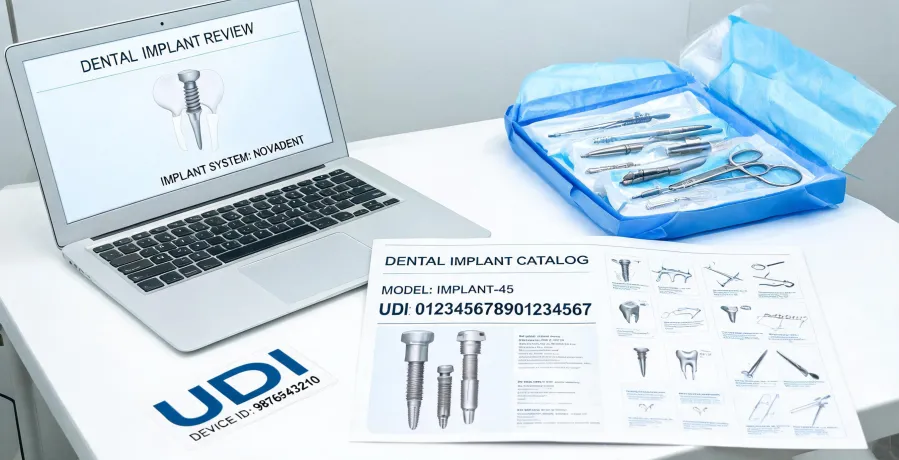
In the last 18 months, this checklist caught 47 potential errors. That’s about 2.6 per month. Most were small—a wrong spec here, a missing component there. But a few were $1,000+ mistakes waiting to happen. One catch saved a $5,000 order of dental implants where the catalog listed a discontinued model. We caught it because we checked the catalog, not just the quote.
What I’d Tell My Past Self
If I could go back to September 2022, I’d tell myself this: the rush fee buys priority, not perfection. It doesn’t guarantee the right item. It doesn’t guarantee compatibility. It just guarantees shipping speed.
And I’d add one more thing: don’t let urgency override verification. The 15 minutes you spend checking the order before hitting “submit” is the difference between a smooth surgery and a $3,200 waste.
The numbers said: “Click expedite, it’ll be fine.” My gut said: “Hmm, wait a minute.” These days, I listen to my gut—and my checklist.
Prices as of March 2025. Actual costs vary by vendor and specifications. Verify current pricing with your distributor.

Leave a Reply