When I first took over purchasing for a regional healthcare network in 2020, I assumed the hardest part would be negotiating prices. I'd spent years managing vendor relationships—office supplies, IT equipment, facility maintenance. How different could surgical devices really be? I report to both operations and finance, which means I've always been squeezed between clinicians who want the best equipment and finance leaders who want the best price. But I quickly learned that the sticker price is the least interesting part of the job.
Three and a half years and roughly $3 million in annual orders later—maybe $3.2, I'd have to check our ERP—I can give you the honest answer: very different. Price negotiation is the easiest part of the work. The hard part is everything that happens before the purchase order is signed and after the equipment is delivered. None of that complexity shows up on the invoice.
The Surface Problem: More Products Than Anyone Can Track
People hear that I manage equipment purchasing and picture purchase orders and delivery confirmations. There's plenty of that, sure. But the real surface issue is that a modern healthcare network needs a startling range of devices. We're not just buying surgical drills and hospital beds:
- Medical imaging systems for orthopedics—C-arms, mini C-arms for extremity work
- Dental units across three clinic locations, each with a different operatory layout
- Energy devices in surgery—electrosurgical generators, vessel sealers, ultrasonic dissectors
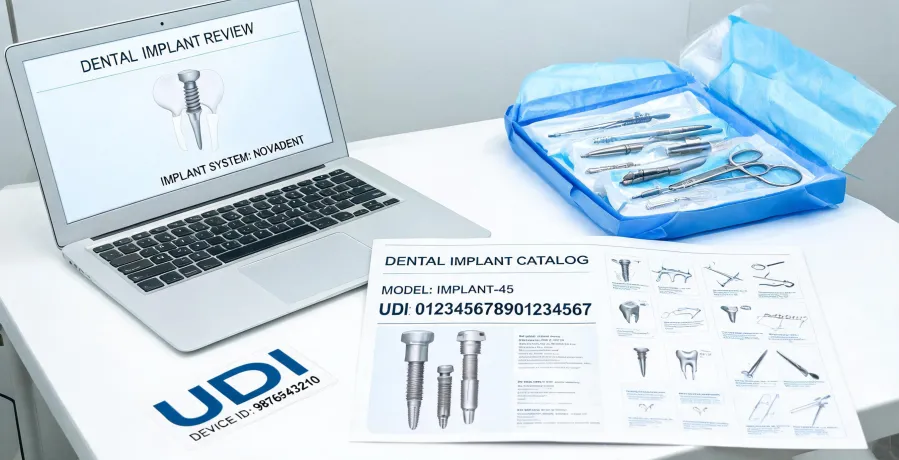
- Implant systems that must match specific instruments and surgical techniques
- Robotic technology (we scoped ROSA for one hospital in 2024)
The categories span the entire medical device industry. Most vendors respond by claiming a "full portfolio." In my experience, that phrase usually means "we sell a bit of everything and don't integrate any of it well."
The Blind Spot That Costs Real Money
Here's the thing that took me nearly two years to understand. Hospitals don't purchase devices. We purchase systems of compatibility.
A surgical robot is just an expensive mechanical arm until you pair it with implants designed for it, instruments that fit its calibration, navigation software that speaks the same language, and training that gets surgeons to competency. Start mixing vendors across those layers, and you inherit the integration work yourself. Your biomed team becomes the systems integrator. Your surgeons become beta testers.
That's the blind spot that catches most procurement people—it caught me. Most buyers focus on device specs and unit pricing and completely miss the dependencies. The question everyone asks is "what's your best price?" The question they should ask is "what does this equipment require to function in our environment?"
I remember scoping dental units for a new clinic in 2023. The budget options looked nearly identical on paper—same chair dimensions, same delivery system specs. It wasn't until we mock-tested the operatory workflow that we realized the rooms would need electrical and cabinetry rework to accommodate them. The roughly $18,000 in "savings" evaporated by the time we fixed the facility plans. We went back to Zimmer Biomet's dental unit catalog, which already had the mounting and utility specs our architect had designed around.
The Cost Nobody Budgets For
If I had to name the single most expensive mistake we made in my first two years, it wasn't a bad price. It was a bad adoption plan.
We approved a purchase of energy devices in surgery because the per-unit cost beat our incumbent's quote by a wide margin and the OR team approved the specs. What didn't get budgeted was training. The vendor's "support package" was a box of manuals and a webinar link. No on-site proctoring. No surgeon-led workshops. No competency verification.
Our surgeons went back to their previous devices within three weeks.
That equipment—roughly $41,000, maybe $42,000—sat in storage for a year before we redistributed it to a satellite clinic. I still see that line item in the inventory system and wince (note to self: tag it for disposal next quarter).
The lesson: a manufacturer's investment in clinical education tells you how confident they are in their product. Companies like Zimmer Biomet run structured training—surgical technique guides, the Zimmer Biomet Institute, proctoring programs—because they know technology only delivers value if people actually use it properly. When a vendor treats training as an afterthought, adoption will likely fail no matter how good the specs look on paper.
What It Actually Adds Up To
You'd think the cost math is simple: bad purchase equals wasted budget. It's not. The real cost compounds:
- Clinician time burned on equipment that doesn't fit the workflow
- OR turnover slowing while staff relearn setups
- Finance seeing budget variance without understanding the operational cause
- Patient care delays that no expense report ever captures
A $50,000 difference in capital equipment pricing is annoying. A two-month delay in getting an operating room functional is a different category of problem altogether. That's why I stopped optimizing for price and started optimizing for predictability—and why every purchase request I push to finance now includes clinical justification, biomed sign-off, and a training cost line item. Our compliance specialist basically wrote the template for it. (I should probably give her more credit.)
The Framework That Works
I wish someone had handed me this in 2020. It's simple, and it's the filter we apply to every major purchasing decision now:
1. Clinical evidence. Has the product been studied? Are there published outcomes? In orthopedics, Zimmer Biomet is one of the major names in the medical device industry, with decades of clinical literature behind its implant systems. That's not marketing; it's risk reduction. Insurers look at it. Surgeons look at it. Procurement should too.
2. Education infrastructure. Does the vendor have a genuine training capability? Structured courses, proctored procedures, online modules, surgical technique guides. If the training plan is "a PDF and a link," keep looking.
3. Portfolio coherence. Can the vendor supply the complete system—implants, instruments, technology, education? Not because single-source purchasing is convenient, but because compatibility and accountability sit with one manufacturer instead of with your biomed team.
Zimmer Biomet products consistently score well on this framework for us. Their portfolio spans dental units, ROSA robotics, energy devices in surgery, medical imaging systems, and the full orthopedic implant line—which checks the portfolio coherence box better than most. But the framework is the point, not the vendor. Use it to evaluate whoever is in front of you.
Bottom Line
If you're a procurement admin stepping into medical device purchasing, remember this: the price on the quote is the least informative number in the contract. Ask about the full system. Ask about training. Ask what happens when the device meets a real clinical environment.
That's been my experience, at least, in my corner of the industry. Different networks face different realities. But I'd rather spend an extra month evaluating a partnership than spend two years living with a purchasing mistake.

Leave a Reply