Office administrator for a 40-person outpatient surgery center. I manage implant and device ordering—roughly $1.2M annually across 15 vendors—and I report to both operations and finance. When I took over purchasing in 2022, I thought my job was to find the right product and send the PO. What I mean is, I treated the whole job as a search problem. Two and a half years and 180 orders later, I know the product is the easy part. The hard part is everything around it.
Most people assume that medical device procurement starts with a catalog. It doesn't. It starts with a question: “Can you check the Zimmer Biomet products catalog for this tray?” Sure, I can. But the catalog alone won't tell me which item number matches our contract, whether the implant is sterile or non-sterile, or why the price changed from last quarter.
What I Thought the Problem Was
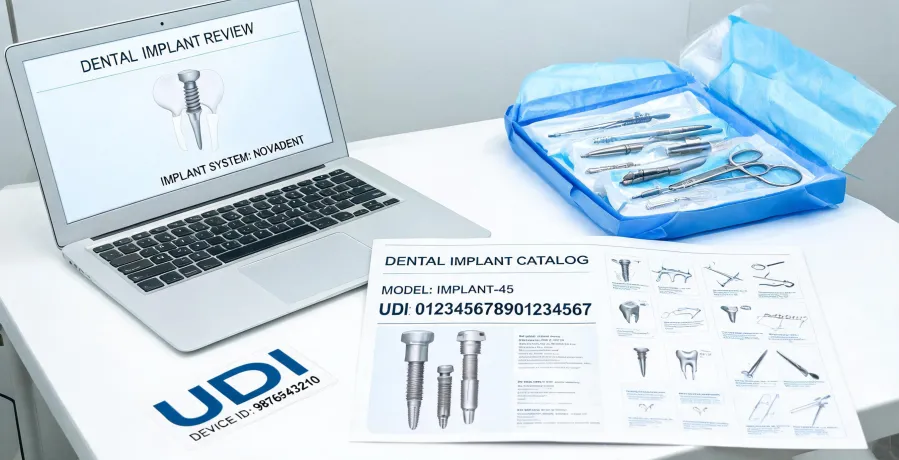
I expected a clean PDF with pictures, item numbers, and pricing. The official Zimmer Biomet products catalog is comprehensive—almost too comprehensive. It lists thousands of orthopedic and dental products, surgical instruments, and robotic-assisted technologies. But a catalog is just a list. The real work is mapping that list to a patient's needs, a surgeon's preferences, and the approved vendor list we're told to use.
The same applies to monitoring equipment. A request for “patient monitoring system supplies for pre-op” sounds simple until you see the category contains sensors, cables, displays, batteries, and an optional network interface. Each one has a separate SKU, and none is obviously connected to the next.
A cardiac stent is a different world entirely. That's not a product we order, but finance once asked me to categorize spend by device type. I had to learn the difference between a vascular implant and an orthopedic implant. Same word, different regulatory path, completely different catalog.
The Deeper Problem: Context, Not Parts
After a few months, I realized the surface problem—hard-to-search catalogs, missing item numbers, confusing pricing—was hiding a deeper issue. Medical device procurement is a game of context. The catalog says what exists. The contract says what we're allowed to buy. The surgeon's preference card says what the doctor actually wants. Those three lists don't always agree.
The vendor side adds another layer. Some suppliers maintain a public catalog and a contract catalog. The public one shows every product. The contract one shows the items you negotiated, with your pricing, your item numbers, and your payment terms. If you order from the wrong list, the PO gets rejected or the invoice gets flagged. I've had both happen.
Definitions also matter more than I expected. If someone asks “what is a biosensor?”, it's not a trivia question. It's a workflow question. A biosensor, generally speaking, is an analytical device that combines a biological recognition element with a transducer to produce a measurable signal. Common examples are blood glucose test strips and lactate monitors. But in a procurement setting, the answer determines which team gets involved. A standalone biosensor might be a lab purchase. A biosensor integrated into a patient monitoring system might require IT approval, a cybersecurity review, and clinical engineering sign-off.
I want to say the first biosensor request I handled was for a research project looking at wound healing. Don't quote me on the exact product. What I remember is that the actual order took 20 minutes after two weeks of internal approvals. The product wasn't difficult. The classification was.
What This Confusion Actually Costs
The obvious cost is price. A hidden fee, a restocking penalty, or a mistake in the item number can eat the supposed savings from a low quote. But the less obvious costs are worse.
In 2023, I ordered a set of locking screws based on a PDF a sales rep sent over, instead of checking the official catalog. The screws arrived, but the item number came from the prior generation. Inventory had no record of it, and finance had no purchase order match. The supplier wouldn't accept a return because the package was opened. We wrote off about $800 and spent hours reconciling the discrepancy. I no longer order implants from a forwarded PDF.
In another case, a vendor offered a great price on patient monitoring system accessories. I didn't ask what wasn't included. The invoice arrived with a generic description and no lot numbers. Finance rejected it, and I had to place a second order somewhere else. The rework cost more than the discount.
Then there's the schedule impact. A delayed surgical case isn't just a scheduling annoyance. It pushes back the next case, keeps the staff on overtime, and puts the surgeon's day behind. In an outpatient surgery center, a 45-minute delay can ripple through the whole afternoon. I don't have a precise dollar figure for our center, but industry analyses consistently point to operating room time as one of the most expensive assets in a healthcare facility.
One useful source is the FDA's medical device classification database. It doesn't list prices, but it does tell you the device class, product code, and review pathway. For anyone in procurement, that can be more valuable than a hundred catalogs.
What Actually Helped (and What Didn't)
I won't pretend I have a perfect system. But four changes made the biggest difference:
- Start with official sources. For Zimmer Biomet, that means their corporate website and the official Zimmer Biomet products catalog. If you need a person, look up the Zimmer Biomet corporate address on their contact page—it's in Warsaw, Indiana—and use the regional support line. This sounds obvious, but a lot of “shortcuts” online are content farms that copy old data.
- Ask what's not included. I've learned to ask “what's not included?” before “what's the price?” A vendor who lists all fees upfront—even if the total looks higher—usually costs less in the end. The opposite is also true: a low quote that hides shipping, compatibility, and add-on fees is almost never the low total cost.
- Understand the category, not just the product. A biosensor, a patient monitoring system, a cardiac stent, and an orthopedic implant are all medical devices, but each has a different regulatory path, storage requirement, sterilization method, and returns policy. The more context you know, the fewer mistakes you make.
- Keep the contract list nearby. The catalog says what exists. The contract says what you can order. Put another way, the catalog is a wish list; the contract is the actual budget. If you don't have a contract list, ask your vendor for one. The quietest red flag in procurement is a vendor who can't produce a clean contract reference list.
This approach worked for us, but our situation was a mid-size outpatient surgery center with predictable ordering patterns. If you're in a trauma hospital with emergency add-on cases, the calculus might be different. I can only speak to the non-acute side of procurement.
Conclusion
The more I work in procurement, the more I'd argue—if you ask me—that transparency is the true differentiator. A rep who forwards a clean PDF is helpful. A rep who says, “Here's the catalog, here's the contract price, and here's what's not included,” is worth more than a discount. That applies whether you're buying an implant, a patient monitoring system, or a cardiac stent from a different manufacturer.
So the next time someone asks me to check the catalog, I don't reach for the PDF first. I reach for the contract, the device classification, and the list of exclusions. The catalog comes last.

Leave a Reply