Last spring, a supply chain director at a regional hospital forwarded me a link with a one-line question: Are these real? The listing promised genuine Zimmer Biomet instruments, new and sealed, at roughly a 35 percent discount from the prices we quote for the same catalog numbers. It took our team under an hour to work out that the box in the photo had been discontinued two years earlier. The listing was still active. That answer, useful as it was, did not fix the system that allowed the listing to exist in the first place.
I work as a quality and brand compliance manager at a medical device manufacturer. After four years in this role, I have stopped being surprised by how many customers buy outside the system we rely on for traceability. In Q1 2024 we logged one quarter of verification requests: about forty, if I remember correctly. Three were obvious counterfeits. Most were genuine products with broken histories, which from a quality standpoint is almost worse than counterfeit.
The Surface Problem: Everybody Thinks the Issue Is Price
When hospital supply budgets get squeezed, procurement teams get measured on numbers they can count: cost per case, savings per supplier, unit price. I understand that pressure. A hospital CFO asking for an 8 percent cost reduction is not unreasonable. But when I hear the phrase the problem is the price we pay, I want to check what happens downstream of the invoice. That is where the money actually goes.
A supply chain analyst can tell you to the cent what an IV catheter costs. They can compare energy devices in surgery by per-case cost, evaluate capital quotes for a cryosurgery device, and find an implant at the best price in the region. These analyses are useful. They are also incomplete. The real cost of a device is not printed on the purchase order; it is everything that happens after the device arrives.
Actually, let me correct myself. The issue is price. Just not the price on the purchase order. It is the total cost of owning that device through a surgery, an audit or a recall. That is a very different number.
The Deeper Problem: You Are Not Buying a Product. You Are Buying a System.
When a regulated medical device is sold through a legitimate channel, most of what you pay for is invisible. The implant or the instrument is only the visible part. Beneath it sits a system:
- clinical studies and design validation completed before the device was cleared;
- manufacturing under a quality management system, with validated sterilization and packaging;
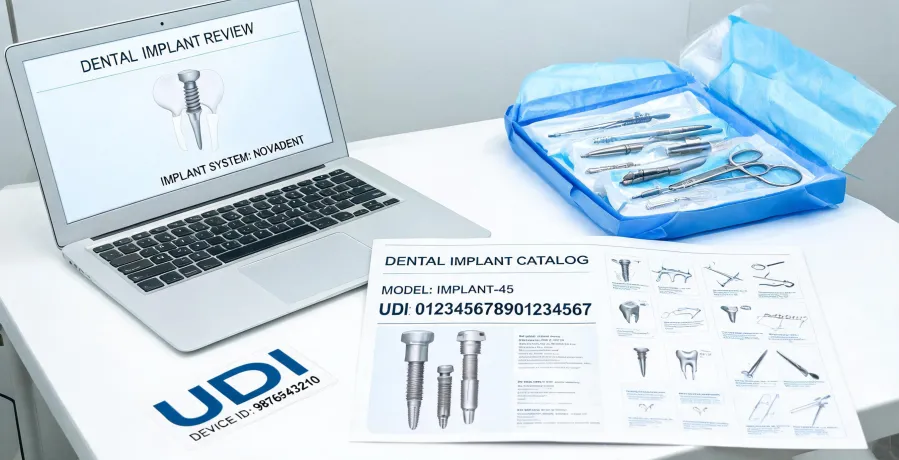
- labelling and UDI traceability for each market where the device is sold;
- complaint monitoring, vigilance reporting and recall readiness.
That system is not overhead. It is the reason a hospital can identify a lot in minutes, trust the sterility of a package and act quickly when something is found. You rarely notice it until it is missing.
Buy from an unauthorized reseller and you may still receive the physical device. It can be authentic; it may have truly left our factory at some point. But you do not get the system that travels with it. You lose guaranteed lot traceability. You lose assurance that the sterile barrier was maintained. If we issue a correction, you may never hear about it. In effect, you have paid for the product but skipped the protections that make it usable in a patient.
To be fair, most resellers are not criminals. Some are liquidators who do not know the history of what they are selling. Some are former distributors with leftover stock. A few listings are outright fakes. The result is the same: nobody can tell you when the device was manufactured, how it was stored, whether the label is correct for your market or where the product has been for the past two years.
Gray market products seldom announce themselves. The listing shows a clean box, a familiar logo and a price that passes procurement review. The buyer is not careless. The problem is that quality looks identical until someone asks for documents the seller cannot provide.
Here is the part that surprises most people. WHO estimates that one in ten medical products circulating in low- and middle-income countries is substandard or falsified (Source: WHO, who.int). In higher-income markets the proportion is generally thought to be far lower, but the bigger risk is not always the obvious counterfeit. It is the genuine but untraceable device sitting in sterile storage until something goes wrong.
What the Bargain Costs After the Invoice
Last year, a clinic bought a sterile single-use lot from a broker because it was $2,900 cheaper than ordering through an official channel. The product looked right. The labelling did not: it was configured for another market, with no English instructions for use and no UDI that resolved in the regulatory database. The clinic caught the issue during receiving and put the entire lot on hold. Over the next two weeks, staff spent an estimated $9,000 in overtime trying to reconstruct the lot history. They never fully did. A $2,900 saving became a five-figure loss, and several procedures had to be rescheduled.
I still kick myself for being slow to respond when they first asked us to verify that lot. But the outcome would not have changed; the purchase should not have happened at all. The spreadsheet showed a lower unit cost. My gut kept asking a question that had no column in the spreadsheet: if this lot fails, who answers for it? As it turned out, nobody. I would add a column for that.
These costs rarely show up in the supply budget. They show up in operating room delays, compliance overtime, expired stock that cannot be returned and procedures interrupted by equipment that behaves differently than expected. The burden often lands on people who have other jobs: the receiving clerk who notices a missing document, the OR nurse who pauses before opening a package, the compliance officer who has to explain a gap during an audit. Those people almost never appear in supplier scorecards.
Buying Smarter Starts With the Channel
The answer is not refusing to negotiate or assuming list price is fixed. The answer is comparing what you receive with and without a controlled chain of custody. In practice, that means a few unglamorous habits:
- Buy through a documented channel. For Zimmer Biomet products, that means the official Zimmer Biomet shop or a manufacturer-authorized distributor. A listing that says sealed box is not traceability. A purchase order from an approved source is.
- Ask for traceability before you pay. A certificate of conformance, sterility certification and lot numbers should arrive with the shipment, not after three follow-up emails. If a seller cannot produce them, walk away.
- Check the label and the UDI. If your market expects a UDI, make sure the one on the package resolves to the product you are actually receiving. Incorrect country labelling is a red flag, not a technicality.
- Verify official recall and regulatory updates. If you search for zimmer biomet dental news today, for example, confirm that the updates you read come from zimmerbiomet.com and not from a third-party reseller. The same test applies to any manufacturer you buy from.
Our own team answers these verification requests every week. It costs nothing to ask whether a listing is legitimate, and I would rather answer that question before payment than investigate after a problem appears.
After four years of reviewing lots, I can tell you that the most expensive device is rarely the one with the highest list price. It is the one whose history cannot be proved. A genuine product from an uncontrolled source is not a bargain; it is a bet. Buy the traceability, and the price tends to make sense.

Leave a Reply