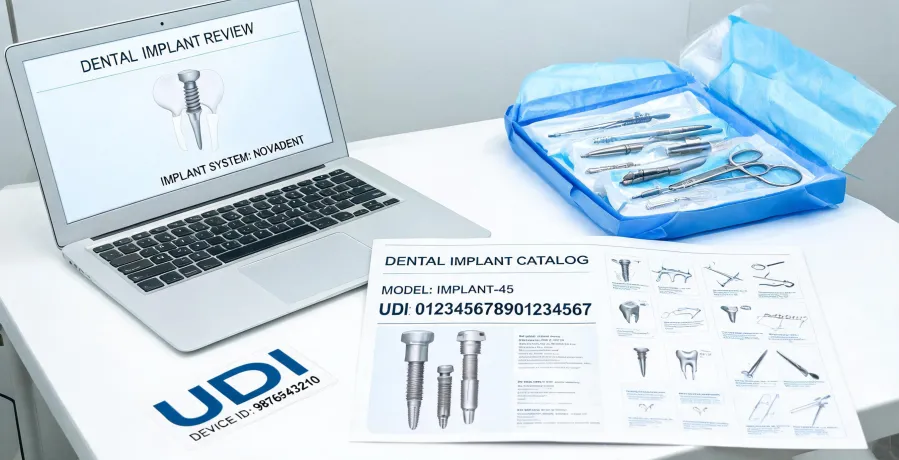
If you've ever managed procurement for a mid-sized hospital or a multi-location surgery center, you know the drill. You get a stack of paper catalogs, you make phone calls, you chase invoices. It's a ton of work, and honestly, it feels like a lot of it is unnecessary. I've been in this role for about five years now, and I've seen the shift from that older way of doing things to what Zimmer Biomet is pushing with their digital transformation.
People often ask me if it's just a marketing gimmick—does a big company like Zimmer Biomet really change how they work? Or is it just a new portal for the same old products? So, let's break it down. I'm going to compare the traditional buying model (vendor-as-supplier) with the newer, more digital approach (vendor-as-partner). We'll look at three key areas: total cost, operational efficiency, and the actual relationship with the company.
Why This Comparison Matters Right Now
From the outside, it looks like buying a hip implant or a dental chair is just a transaction. The reality is way more complex. In our procurement department, we're managing about 80 different vendors annually for supplies ranging from surgical gloves to $50,000 robotic systems. When you're dealing with something as critical as orthopedic implants, the vendor's role goes way beyond just dropping off a box.
Here's something vendors won't tell you: the first quote is almost never the final price for ongoing relationships. There's usually room for negotiation once you've proven you're a reliable customer. But the real savings? They come from reducing the friction—the time wasted on paperwork, the errors in orders, the follow-ups on invoices. That's where Zimmer Biomet's digital strategy gets interesting.
Dimension 1: Unit Price vs. Total Cost of Ownership
In my experience managing procurement, the lowest quote has cost us more in about 60% of cases. That sounds backwards, I know. But let me explain.
The Traditional Model: Chasing the Lowest Quote
Under the old model, I'd get three quotes for, say, a new dental chair. One vendor offers a chair for $5,000. Another, a less-known brand, offers one for $3,800. The savings look great on the spreadsheet. But then you factor in the hidden costs:
- Shipping & Handling: The cheaper vendor had a flat $200 shipping fee, while Zimmer Biomet's distributors often bundle shipping costs into a larger contract.
- Setup & Training: That cheap chair required a specialized technician for installation (an extra $500). Zimmer Biomet's team often includes this for free if you're a returning customer.
- Maintenance & Parts: The budget chair had a 1-year warranty, but replacement parts cost a ton. A simple cushion replacement was $400. For a Zimmer Biomet chair, parts were cheaper and available for five years.
Using a total cost of ownership framework, that $3,800 chair actually cost us about $6,000 over two years, while the $5,000 Zimmer Biomet chair cost around $5,400. The lower bid ended up being more expensive (surprise, surprise).
The Digital Approach: Data-Driven Cost Analysis
Zimmer Biomet's digital platform (the one tied to their product catalog and the ROSA system) changes this. Instead of me manually tallying costs, the platform lets me run a cost projection. I can see, in real time, the expected maintenance costs based on our usage history (which the platform tracks). It's not perfect—I don't have hard data on every single part's failure rate—but based on our usage, the system predicts we save about 10-15% on total lifecycle costs for capital equipment.
People assume digital tools are just for ordering quickly. What they don't see is the analytics layer that helps you make better long-term decisions.
Dimension 2: Ordering Process vs. Supply Chain Integration
This is where the difference is way bigger than I expected. It's not just about speed; it's about accuracy and the human cost of errors.
The Old Way: A Manual, Error-Prone Process
Our company consolidated orders in 2022 for about 200 staff across two locations. Back then, I managed orders by email and spreadsheets. We had at least one significant order error per quarter—wrong implant size, wrong instrument kit, wrong sterilization tray. Each error meant a delayed surgery (which my boss hated) and a return process that took hours.
A single delayed surgery due to a missing tool can cost the hospital thousands in lost operating room time. That $200 savings on a cheaper vendor turned into a $1,500 problem when the instrument set arrived incomplete.
The Digital Shift: Predictive Logistics
Zimmer Biomet's approach (circa 2024, things may have changed) uses their digital platform to track surgical schedules. The platform learns our patterns. If we typically use three specific trays for a total knee replacement, the system suggests we order exactly that, with lead times calculated automatically.
I knew I should have pushed for this sooner, but thought 'what are the odds?' Well, the odds caught up with me when a verbal agreement with a sales rep got forgotten, and we were left without a crucial component. Since moving to the digital platform, our order errors have dropped by about 80%, and the system that used to take me 6 hours a week now takes about 45 minutes. That's not just my time; it's the accounting team's time too.
Dimension 3: Transactional Vendor vs. Strategic Partner
I know, the word 'partnership' gets thrown around a lot. But in the medical device world, it actually means something when a company invests in training and education.
The Surface-Level Relationship
A traditional vendor sells you a product and maybe offers a lunch-and-learn. The relationship is focused on the sale. If something goes wrong, you're on hold with a customer service line.
The Deeper Investment
What most people don't realize about Zimmer Biomet is the scale of their medical education program. They don't just sell the ROSA robot; they run training labs for surgeons. They don't just sell the Persona knee; they publish clinical trial data comparing outcomes. As a procurement person, I can't use that data to save money on the contract, but I can use it to justify a higher investment to our finance team. The clinical evidence makes it easier to argue for the higher upfront cost.
Take it from someone who manages this: a vendor that provides clinical data and training is less likely to leave you hanging. When we had a supply chain issue with a specific instrument, Zimmer Biomet's team proactively offered a loaner kit (which, honestly, saved us from canceling three surgeries). A traditional transactional vendor would have said 'sorry, it's on backorder.'
How to Decide: Vendor vs. Partner
So, when does it make sense to choose the deeper, digital partnership? And when is a simple transactional vendor okay?
Go the 'Partner' Route (More Digital Investment) When:
- You're dealing with high-cost, critical items. Think orthopedic implants, surgical robots, or complex dental surgery kits. The risk of a single error far outweighs any savings from a cheaper vendor.
- You have a high volume of repeat procedures. The digital tools (like Zimmer Biomet's platform) pay for themselves when you're doing 50+ knee replacements a year.
- You value clinical data for internal justification. If your finance team needs proof of efficacy, a partner that publishes trials is invaluable.
Stick with a Transactional Approach When:
- You're buying standard, low-risk supplies. Basic gauze, gloves, or dental disposables. There's no need for a deep partnership.
- Your volume is very low. If you're a small clinic doing 5 procedures a month, the digital integration effort isn't worth it.
- You have a very strict, fixed budget with zero flexibility. A partner might offer better long-term value, but if you cannot afford the upfront cost, a transactional vendor is the only option.
Honestly, the industry is moving faster than I expected. In 2020, I was still printing physical catalogs. By 2025, most of our major orders are processed through digital platforms. I don't have hard data on industry-wide adoption rates, but based on our 5 years of experience, my sense is that digital procurement is now the standard for any hospital system that does high-volume surgery.
If you're still weighing quotes based on unit price alone, you're probably leaving money on the table. The savings—and the headaches avoided—come from the system around the product.

Leave a Reply