-
Three Scenarios Before You Spend a Dollar
-
Scenario A: Adding Total Joint Surgery
-
Scenario B: Adding Dental Implants to a Dental or Oral Surgery Practice
- Scenario C: Adding Point-of-Care Ultrasound to a Musculoskeletal Clinic
-
Three Questions to Identify Your Scenario
-
The Rule That Saved Us the Most Money
If you came searching for a single answer to what an orthopedic or dental facility should buy before it starts doing implants, you're going to leave disappointed. There isn't one universal answer—and the sooner a purchasing team accepts that, the less money it wastes.
I manage procurement and supply contracting for a 90-person ambulatory orthopedic and dental group. For about six years I've tracked roughly $2.4 million a year in clinical equipment and supply spend, negotiated with more vendors than I can count, and made my share of buying mistakes. The biggest one? I bought equipment because a center down the road had it—without checking whether we did the same cases or the same volume.
Three Scenarios Before You Spend a Dollar
Match the spending to the work you'll actually do, not the work you hope to attract. Most buying decisions fall into one of three buckets:
- Scenario A: You're adding total joint replacement in a hospital or ambulatory surgery center.
- Scenario B: You're adding dental implant surgery in a dental or oral surgery practice.
- Scenario C: You're adding point-of-care ultrasound to a musculoskeletal or sports medicine clinic.
If your facility mixes all three, start with the highest-acuity scenario and scale down from there.
Scenario A: Adding Total Joint Surgery
The conversation shouldn't start with price. It should start with the surgical technique. If your surgeons use the G7 acetabular system in total hips, ask your Zimmer Biomet rep for the current Zimmer Biomet G7 surgical technique before anyone starts talking discount. The technique guide walks through exposure, reaming, shell impaction, liner assembly, and closure. Each step creates a demand for instruments, trials, and trays. The PDF is free; the trays are not.
The counterintuitive move: during the first 12 months, don't play two implant systems against each other just to shave the per-piece quote. Variation between systems means variation in trays, technique, surgeon learning curves, and staff errors. When we standardized on one hip technique, our setup errors dropped and sterile processing stopped backing up. That saved us more than any implant discount I negotiated that year.
Then budget for the non-implant costs. If you're doing outpatient joints under spinal anesthesia with sedation, your patient monitoring system needs more than pulse oximetry. We treat continuous capnography as non-negotiable; by the time SpO2 drops, a sedated patient can already be in trouble. If your current monitors don't support EtCO2, that upgrade belongs in year one.
Imaging is where we wasted the most money. A C-arm is not automatically required for total joints. Honestly, I'm still not sure why one surgeon asked for a mini C-arm—my best guess is habit from a trauma fellowship. It was used maybe four times in 12 months. For the rare case that truly needs live fluoroscopy, rent the equipment or book the room that has it. Buy a medical imaging system when the monthly volume justifies it, not because a surgeon wants one just in case.
Finally, remember that vendor loaner trays are free to borrow but not free to process. Reprocessing, inspection, and the occasional opened-but-unused sterile backup all hit your budget. In our setting, one extra joint tray added roughly $3,800 a year in labor and materials. Free loaners aren't free.
None of this means starving the program. It means the capital you do spend should land on equipment that gets used in every case: the implant system, the patient monitoring system, and a power platform with enough battery capacity for your schedule. The rare-use machine can be rented until the volume proves otherwise.
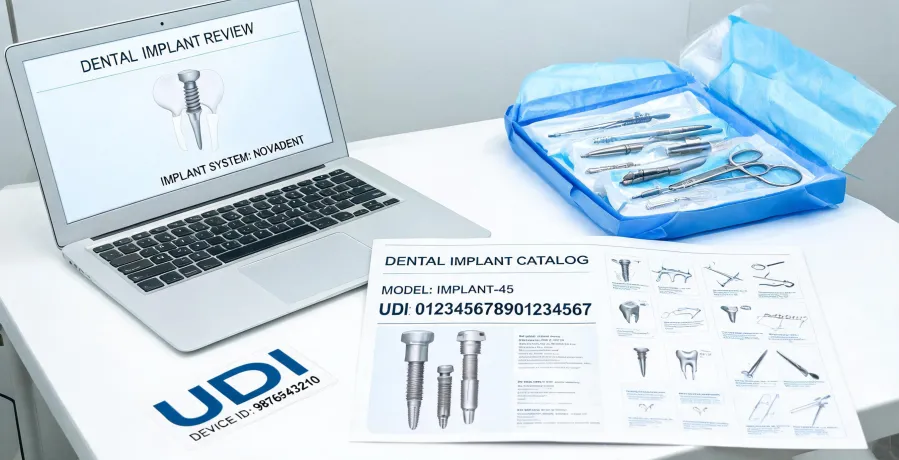
Scenario B: Adding Dental Implants to a Dental or Oral Surgery Practice
If you assume dental implants are just smaller orthopedics, you'll overbuy hospital equipment that never earns its keep. But don't underbuy monitoring.
A dental implant suite still needs a real patient monitoring system for sedated patients. State dental boards and the American Society of Anesthesiologists' guidelines point the same direction: if a patient is moderately or deeply sedated, you need continuous oxygenation and ventilation monitoring, including capnography where required. That is not the line item to cut.
Power equipment is where the math gets interesting. When a Zimmer Biomet rep quoted our implant motor system, the package looked complete: handpiece, charger, and one Zimmer Biomet battery pack. That package is enough if you do one implant day per week and can wait for the battery pack to charge and sterilize between stages.
We nearly ordered a second battery pack out of reflex. Then I checked the schedule: two or three implant cases a month. The spare would have sat in a drawer while its battery chemistry aged. Our fix was scheduling, not spending. If you're placing implants in multiple patients most days—roughly six to eight cases a week or more—the backup Zimmer Biomet battery pack starts to make sense. Our quote for a second pack landed near $1,700 in early 2025; verify current pricing with your rep because these bundles are negotiable.
For dental implant planning, a cone-beam CT is usually the medical imaging system worth evaluating—not a hospital CT scanner and not a C-arm. It answers the bone questions you need answered at lower cost, lower radiation, and a fraction of the footprint.
Scenario C: Adding Point-of-Care Ultrasound to a Musculoskeletal Clinic
Ultrasound is the least expensive medical imaging system we ever added, and the easiest one to waste money on—because teams buy it before they clarify what it should show.
What does ultrasound show?
For musculoskeletal work, ultrasound shows soft tissue and fluid in real time. It earns its keep in three situations:
- Checking for joint effusion, bursitis, and certain tendon tears, especially in the shoulder and around the knee.
- Guiding injections and aspirations so the needle goes where it should.
- Doing dynamic exams—watching a tendon or joint move—which MRI can't replicate in the same way.
What it does not show is just as important: bone marrow edema, deep cartilage damage, and many intra-articular structures. If the clinical question lives inside bone or deep in the joint, you still need MRI. Adding ultrasound is smart only when your clinicians know which question each tool answers.
Before you choose a probe, look at the American Institute of Ultrasound in Medicine's practice parameters for musculoskeletal ultrasound—they describe what a complete exam should record and give you a benchmark for vendor demos. The other catch is the operator. Ultrasound is not like X-ray where a technician pushes one button. A competent user with a mid-range machine outperforms someone untrained with the most expensive console. When comparing quotes, ask who will scan and how you'll keep their skill current, not just which probes are in the box.
There is also a quality dimension. Patients can't feel the coating on an implant and will never read a surgical technique guide. But they do remember whether their injection was done with imaging guidance instead of blind, and whether the room looked deliberate and modern. Those small signals are your brand.
Three Questions to Identify Your Scenario
If you're still not sure which scenario applies, answer these three questions before calling any vendor.
1. Will anesthesia or sedation be in the room? If yes, you need Scenario A or B monitoring—capnography included—before you think about implants or imaging.
2. What anatomy are you actually treating? Replacing a hip and placing a dental implant both need implants and power tools, but they use different imaging, different trays, and different room designs.
3. Which imaging question has to be answered? Bone stock is X-ray or cone-beam CT. Soft tissue is ultrasound or MRI. If no one can articulate the question, don't buy the machine yet.
The Rule That Saved Us the Most Money
After all the mistakes, one rule drives our capital plan: buy for the workflow you have, then put remaining quality budget where patients and staff actually feel it. That means reliable monitoring in every sedated procedure room, dependable power equipment, and imaging that answers the cases you schedule—not the cases you hope to attract.
I can only speak to my context: a multi-site group large enough to standardize surgeons around one technique and one instrument platform. If you're a one-room dental office, a spare Zimmer Biomet battery pack may be the smartest purchase you make all year. The point isn't to copy our shopping list. It's to ask the same question—what does this procedure actually require?—before the rep writes up the order.

Leave a Reply