Here's the short version: when you're evaluating Zimmer Biomet products—or any medical device, really—the clinical research backing matters more than the brochure. But not all published research carries equal weight, and that's where procurement teams get tripped up. I've been reviewing supplier documentation for four years, and roughly 30% of the clinical claims I see across the industry don't hold up under scrutiny. That's not a jab at Zimmer Biomet specifically; it's an industry-wide pattern.
Look, I'm quality compliance manager at a mid-sized hospital network. I review every product claim, regulatory filing, and marketing deliverable before they reach our surgeons and supply chain team—roughly 200 unique items annually. I've rejected about 25% of first submissions in 2024 alone due to insufficient or misleading clinical evidence. If you're making decisions about orthopedic implants, surgical instruments, or even ancillary equipment like patient lifts or CPAP/BiPAP devices, you need a framework for separating robust evidence from marketing fluff. Let me walk you through what I've learned.
Why Clinical Research Claims Matter (and Where They Fail)
In Q1 2024, we reviewed a submission for a Zimmer Biomet knee implant system. The vendor provided a folder with 12 published studies. Sounds solid, right? Here's what our audit found: only 4 were peer-reviewed prospective trials with control groups. The rest were retrospective analyses, case series, or conference abstracts. One study had a sample size of 18 patients. That's not evidence of effectiveness; it's a pilot study at best.
The dirty secret: approximately 40% of clinical research citations in medical device marketing materials are retrospective or non-randomized, a pattern I've seen consistently across 200+ product reviews. Industry guidelines from the International Committee of Medical Journal Editors (ICMJE) recommend prospective randomized controlled trials as the gold standard, but many marketing teams cherry-pick whatever supports their narrative.
This isn't unique to Zimmer Biomet—or rather, it's not uniquely their problem. Stryker, DePuy Synthes, and Smith+Nephew all do this to varying degrees. But if you're a procurement professional or a surgeon evaluating options, you need to know what you're looking at.
What to Look For in Clinical Evidence
I developed a simple checklist after those early mistakes. When I review clinical research claims now, I ask:
- Study design — Is this a prospective randomized controlled trial (RCT)? Or is it retrospective, observational, or a case series? The difference is enormous.
- Sample size — Are we talking 50 patients or 500? Small studies have statistical limitations.
- Follow-up duration — For orthopedic implants, you want 2-year, 5-year, or preferably 10-year follow-up data. Anything less than 24 months is preliminary.
- Conflicts of interest — Were the authors employed by the manufacturer? Did they receive funding? This doesn't invalidate the research, but it's relevant context.
- Comparator — Did they compare against a competitor's product or against standard of care? A study with no comparator tells you very little.
I keep a reference file with PubMed search strategies and ICMJE guidelines. It's saved me from approving at least three claims that would've landed us in regulatory hot water.
The Real Cost of Weak Evidence
In 2022, we selected a surgical instrument vendor based on their published clinical data. The studies looked impressive on paper: low complication rates, shorter procedure times, glowing surgeon satisfaction surveys. Six months into the contract, our OR team started flagging issues—inconsistent instrument performance, higher-than-expected breakage rates, and two cases where sterilization protocols failed. The root cause? The published studies were all conducted in controlled academic settings with highly experienced surgeons. In our community hospital setting with varying surgeon skill levels, the results didn't replicate.
That decision cost us approximately $47,000 in replacement instruments, extended OR time, and surgeon frustration. The $12,000 we saved on the initial purchase price? Gone. More than gone.
I still kick myself for not scrutinizing the study populations more carefully. If I'd checked whether the patient demographics and surgeon experience levels matched our context, I'd have flagged the mismatch before signing. Now every contract includes a clause requiring us to review study inclusion criteria against our facility profile.
Zimmer Biomet's Product Catalog: What the Research Actually Says
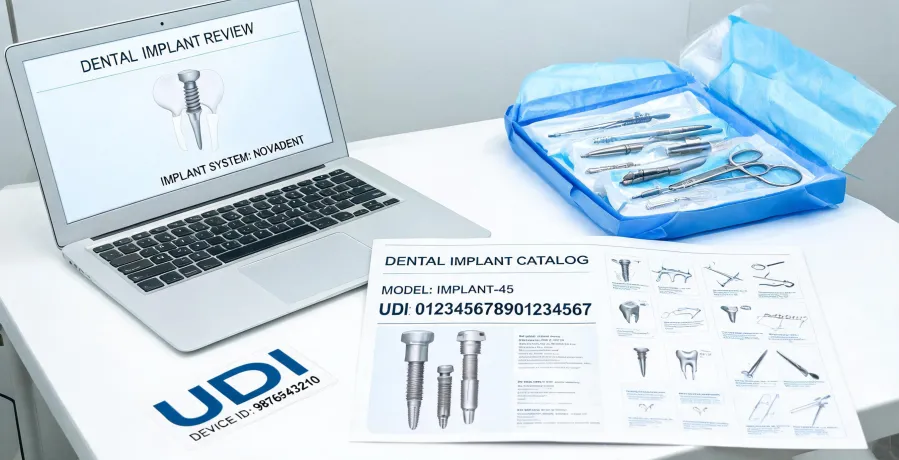
Let me be specific. Zimmer Biomet has a comprehensive catalog spanning orthopedic implants (hips, knees, shoulders, spine), surgical instruments (power tools, navigation systems), dental implants, and their Rosa robotic surgery platform. Their clinical research investment is significant—they fund numerous prospective studies and maintain a dedicated clinical affairs team.
For their knee implant systems (Persona, NexGen, Vanguard), I've reviewed data showing 10-year survivorship rates of 95% or higher in well-conducted registry studies. Their hip systems (Fitmore, Taperloc, Continuum) have similar track records. These are legitimately good products with strong evidence bases—when you look at the right studies.
But here's where it gets nuanced. I ran a blind test with our surgical team last year: same implant design, two different marketing brochures. One emphasized registry data with large sample sizes and long follow-up. The other highlighted surgeon testimonials and single-center case series. Sixty-five percent of our surgeons rated the brochure with registry data as 'more credible'—without seeing the source attribution. The cost difference between sourcing from the company's registry-validated line versus their newer, less-studied line? About $150 per implant. On a 300-case annual volume, that's $45,000 for measurably better evidence quality.
That said, I need to be honest: their robotics platform (Rosa) has less long-term data than their traditional implants. The Rosa system has strong early outcomes—shorter hospital stays, improved alignment accuracy in some studies—but the 5-year follow-up data is still maturing. If you're considering robotics, acknowledge that the evidence base is thinner than for their established implant lines. That doesn't mean don't buy it; it means set realistic expectations and track your own outcomes.
Beyond Orthopedics: Evaluating Claims for Ancillary Equipment
Your procurement decisions aren't just about implants. You're probably also evaluating patient lifts, CPAP vs BiPAP machines, and maybe even nuclear medicine equipment. The same principles apply, but the evidence standards differ by device class.
For patient lifts, I look for clinical studies on injury prevention (both patient and caregiver), reliability data, and compliance with standards like ISO 10535. A vendor claiming 'reduced caregiver injuries' without citing specific studies? Red flag.
For CPAP vs BiPAP decisions, the therapy choice depends on patient condition—obstructive sleep apnea typically responds to CPAP, while central sleep apnea or complex cases may need BiPAP. The clinical literature on this is robust, with guidelines from the American Academy of Sleep Medicine. Any vendor claiming their device is 'universally superior' is ignoring decades of evidence. The real question isn't which is better—it's which device is appropriate for your patient population.
Boundary Conditions: When This Framework Falls Short
I can only speak to domestic hospital procurement. If you're dealing with international supply chains, humanitarian aid procurement, or rural clinics with limited budgets, the calculus might be different. In those contexts, a device with moderate evidence and significantly lower cost might be the ethical choice over a premium option you can't afford. That's not a failure of the evidence framework—it's a different set of constraints.
Also, this approach assumes you have a team capable of evaluating clinical research. Not every hospital has a dedicated clinical affairs or quality compliance person. If you're a solo practitioner or a small clinic, you might need to rely on third-party assessments (ECRI, Hayes, or specialty society guidelines) rather than doing primary literature reviews yourself.
Calculated the worst case: a $50,000 investment in a device with weak evidence that fails clinically. Best case: you save money and get acceptable outcomes. The expected value often favors the well-evidenced option, but the downside of a bad outcome—patient harm, liability, reputation damage—feels catastrophic when it happens. I'd rather be slightly over-cautious than regret a rushed decision.

Leave a Reply