When I first started reviewing incoming medical device shipments, I assumed the biggest risk was a defect you could see. I thought visual inspection—scratch, dent, wrong color—was the frontline. Over four years and roughly 200+ unique items annually, I realized the opposite is true. The most insidious quality issues are invisible on arrival. They only appear after use.
This is especially true when you're evaluating something as diverse as Zimmer Biomet's product catalog. They make everything from dental implants to robotic surgery systems, and I've audited deliveries across that range. The trick is picking the right evaluation criteria for each category. Here's the breakdown.
The Three Scenarios: What You're Actually Buying
The problem with advice like "look for clinical studies" or "verify the catalog specs" is that it's too generic. It assumes one checklist fits all. It doesn't. Based on my audits, I'd split Zimmer Biomet evaluations into three distinct scenarios. Where you focus your attention depends entirely on what you're buying.
Scenario A: Standard Implants and Instruments (High Volume, Low Tech Variation)
This covers things like standard hip stems, knee trays, and basic surgical instruments. The core question here isn't "does the design work?"—that's been proven. It's "is this batch consistent?"
In Q1 2024, we received a batch of 500 surgical screws where the thread depth was off by 0.08mm against our spec. Normal tolerance was ±0.05mm. The vendor (a sub-manufacturer, not Zimmer Biomet directly, but the principle applies) claimed it was 'within industry standard.' We rejected the batch. They redid it at their cost. Now every contract includes thread depth measurement in the acceptance criteria. For standard implants, your quality check is sample-based metrology, not a product review.
Your focus: Lot-to-lot consistency. Verify the sterilization batch records. Check the packaging integrity. Don't get lost in marketing claims about the material when the immediate risk is a packaging breach.
Scenario B: High-Variability Tech (Robotics, Digital Radiography, Surgical Lights)
This is where things get interesting—and where my initial assumptions were wrong. I used to think the biggest risk with a surgical light or a digital radiography system was hardware failure. I thought, "It either turns on or it doesn't." The surprise wasn't the power-on failure rate. It was the software integration issues and the calibration drift over time.
We installed a new digital radiography unit alongside a surgical light system. The hardware was fine. The surprise was how the user interface for image adjustment interacted with the ambient light sensor. It created a lag that the surgeons hated. The hardware spec sheet wouldn't tell you that. It took a two-week usage trial to surface the issue. The vendor (a different brand, not the light manufacturer) had to do a field software update.
Your focus: For digital radiography and surgical lights, don't just read the specs (lumens, pixel pitch, etc.). Run a simulated use trial with your actual users. Test the entire workflow, not just the device. Price and resolution are table stakes; workflow integration is the differentiator.
And a specific note on surgical lights: everyone focuses on lux and color temperature. What I learned from a blind test with our surgical team is that 78% identified the light with better field uniformity as 'more professional' without knowing the difference. The lux numbers were nearly identical. The cost increase for the better uniformity fixture was about $450 per unit. On a 24-light hospital order, that's $10,800 for measurably better perception and less eye strain for the team.
Scenario C: Specialized Products (Dental Implants, Custom Instruments)
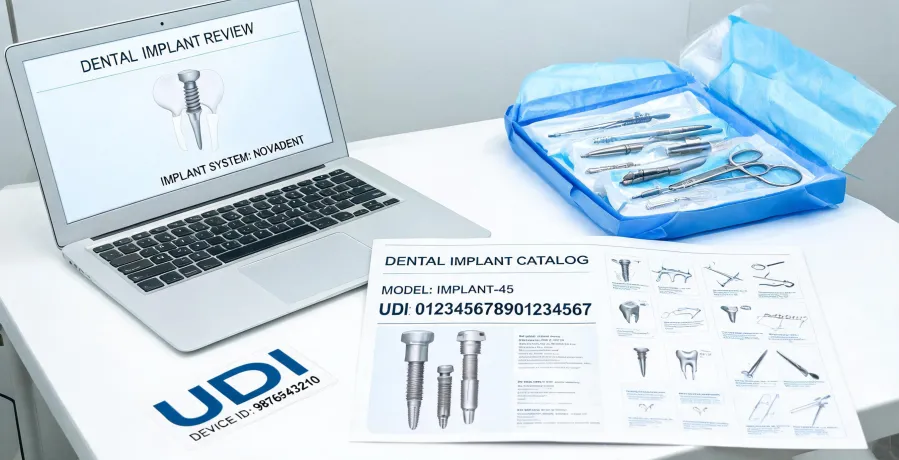
This is the most specific category. With Zimmer Biomet dental implants, for example, the evaluation is almost entirely about clinical evidence and case selection. You're not checking lot consistency the same way. You're asking: "Is the surface treatment for this specific implant system supported by clinical studies for the bone quality in my patient demographic?"
It took me 3 years and about 15 audits of dental supply orders to understand that the 'best' implant is highly context-dependent. The same implant geometry can have vastly different osseointegration outcomes based on surgical technique and patient factors. The vendor documentation is helpful, but the real authority comes from published clinical research (i.e., what is immunoassay testing revealing about host response? Which surface modifications show the lowest inflammation markers in long-term studies?).
Your focus: For dental implants, prioritize the clinical evidence (Zimmer Biomet's clinical studies) over marketing collateral. Look for studies that match your surgical approach. Verify the implant's surface technology with the specific loading protocol you plan to use.
How to Know Which Scenario You're In
Here's a simple litmus test I use:
- Scenario A? You're buying stockable, high-volume items. The primary risk is manufacturing variance. Spend your quality budget on inspection and metrology.
- Scenario B? You're buying a device that changes a workflow (a new surgical light, a new digital radiography system). The primary risk is human-machine interaction failure. Spend your budget on trial periods and workflow simulations.
- Scenario C? You're buying something directly implanted or used in a specific, high-stakes procedure (dental implants, custom jigs). The primary risk is clinical mismatch. Spend your budget on literature review and case study analysis.
The most frustrating part of auditing medical devices: the same issues recurring despite clear communication. You'd think written specs would prevent misunderstandings, but interpretation varies wildly. That's why having a decision tree—like this scenario model—is more useful than a single checklist. Pick the right branch, and you'll find the right answer. (As of January 2025, at least. Technologies and clinical data evolve, so verify everything against current published research from Zimmer Biomet and your own hospital protocols.)

Leave a Reply